
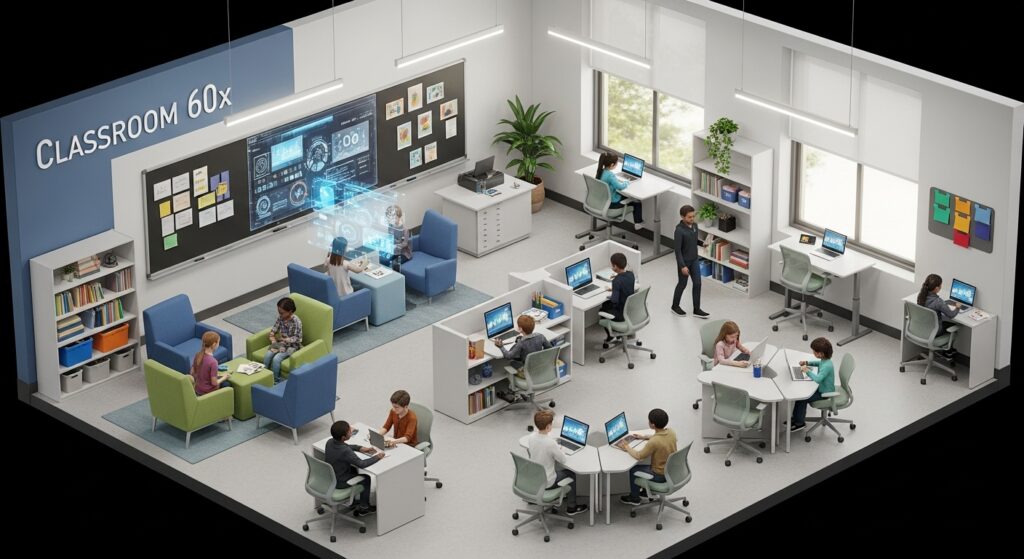
Education is evolving, and so are the spaces where learning takes place. Gone are the days of rigid rows of desks and outdated teaching methods. Enter Classroom 60x an innovative approach to shaping dynamic learning environments that cater to diverse educational needs. This concept emphasizes flexibility, creativity, and collaboration among students and educators alike. But what exactly does Classroom 60x entail? And why should we care about how classrooms are designed? Let’s dive deeper into this transformative idea that promises to elevate the educational experience for everyone involved.
What is Classroom 60x?
Classroom 60x is a transformative educational approach designed to enhance learning environments. It emphasizes the integration of technology, collaboration, and flexible spaces to create dynamic classrooms.
At its core, Classroom 60x fosters an atmosphere where students are active participants in their education. This model encourages engagement through interactive activities and real-world problem-solving.
By placing importance on adaptability, Classroom 60x allows educators to tailor their teaching methods based on student needs. The focus shifts from traditional rote memorization to critical thinking and creativity.
Schools implementing this framework often see increased motivation among students. They thrive in settings that empower them to explore and innovate while working alongside peers.
This innovative concept not only revolutionizes teaching practices but also prepares learners for future challenges by equipping them with essential skills needed in today’s world.
The Importance of Learning Environments
Learning environments play a crucial role in shaping student experiences. The atmosphere of a classroom can significantly influence engagement and motivation. When students feel comfortable, they’re more likely to participate actively.
A well-designed space fosters collaboration among peers. It encourages open discussion and idea exchange. This interaction enhances critical thinking skills that are vital for academic success.
Moreover, the aesthetic appeal of a classroom affects mood and focus. Bright colors, natural light, and inspirational decor can uplift spirits and stimulate creativity.
Equally important is flexibility in furniture arrangement. Movable desks or seating options allow for varied teaching methods, catering to diverse learning styles.
Investing time into creating an ideal learning environment pays off through improved student performance and satisfaction. A positive setting nurtures curiosity and inspires lifelong learners.
Understanding Classroom 60x
Classroom 60x is more than just a physical space; it’s a dynamic approach to education. This concept reimagines the traditional classroom by emphasizing flexibility and adaptability.
At its core, Classroom 60x promotes interactive learning experiences. It encourages students to engage actively rather than passively absorbing information. The layout often includes movable furniture, collaborative zones, and technology integration that facilitates communication among peers.
Moreover, the design reflects diverse learning styles. Visual learners thrive with displays and graphics, while kinesthetic learners benefit from hands-on activities in designated areas.
This innovative environment fosters creativity and critical thinking skills. Students feel empowered to express themselves freely within an atmosphere designed for exploration.
Understanding Classroom 60x involves recognizing its potential to transform educational practices fundamentally. Teachers play a crucial role in guiding this transformation as they adapt their methods to suit these vibrant spaces.
Benefits of a Classroom 60x
Classroom 60x transforms traditional learning by prioritizing flexibility and engagement. With adaptable spaces, students can thrive in various setups group work, individual study, or collaborative projects.
Enhanced interaction is another key benefit. The design encourages communication among peers and fosters a sense of community. This dynamic atmosphere promotes teamwork and critical thinking skills.
Moreover, the integration of technology becomes seamless in this environment. Students have easy access to digital resources that enrich their learning experience.
In such versatile settings, teachers can tailor their approaches to meet diverse needs. They can implement innovative teaching strategies that cater to different learning styles.
Classroom 60x nurtures creativity. When students feel comfortable in their space, they are more likely to express ideas freely and think outside the box.
Designing a Classroom 60x
Designing a Classroom 60x requires a vision that goes beyond traditional layouts. Flexibility is key; furniture should be movable to accommodate various teaching styles and activities.
Creating distinct zones within the space enhances focus. Designate areas for collaboration, quiet study, and technology use. Each zone should invite interaction while catering to different learning needs.
Consider lighting as well. Natural light fosters a more inviting atmosphere, while adjustable artificial lighting can set the mood for different tasks.
Incorporating technology seamlessly into the environment is essential too. Interactive whiteboards and charging stations shouldn’t just fill the room but inspire engagement among students.
Don’t overlook color choices. Bright hues can energize students, while calming tones may help in concentration. Every detail matters when crafting an ideal classroom 60x experience that truly supports modern learning dynamics.
Implementing Classroom 60x in Schools
Implementing Classroom 60x in schools requires a thoughtful approach. It begins with engaging stakeholders, from teachers to administrators and parents. Their input is crucial for aligning the vision of this innovative learning environment.
Next, training sessions play a key role. Educators need to understand how to utilize new technologies and flexible spaces effectively. This knowledge empowers them to create dynamic lessons that resonate with students.
Physical layout adjustments are also essential. Classrooms should be designed not just for lectures but for collaboration, creativity, and exploration. Mobile furniture can facilitate this transformation.
Additionally, integrating technology is vital. Tools like interactive whiteboards and digital resources enhance student engagement significantly.
Ongoing assessment helps track progress as well. Gathering feedback ensures that the implementation remains responsive to both educators’ needs and students’ experiences within the classroom setting.
Success Stories and Results from Classroom 60x
Across various schools, Classroom 60x is making waves. Educators are witnessing remarkable transformations in student engagement and achievement.
One notable case comes from a middle school that adopted the model last year. Teachers reported an increase in collaboration among students. The new layout sparked creativity during group projects.
Another success story originates from an urban high school. By implementing Classroom 60x techniques, they saw improved attendance rates as well. Students felt more connected to their learning environment.
Data showcases significant improvements too. Standardized test scores rose by an impressive margin after adopting this innovative approach. It’s evident that when students thrive in their surroundings, academic performance follows suit.
Feedback highlights increased motivation among learners as well. When classrooms become dynamic spaces for exploration, curiosity flourishes naturally within young minds.
Challenges and Solutions for Classroom 60x
Implementing Classroom 60x can come with its own set of challenges. One primary concern is resistance to change from educators and administrators. Many are accustomed to traditional teaching methods and might hesitate to embrace a new paradigm.
Another issue could be budget constraints. Schools often face financial limitations, making it hard to invest in innovative resources or technology necessary for the transition.
Professional development is crucial as well. Teachers may require training on how to effectively utilize the new environment for optimal learning outcomes.
To tackle these issues, schools can initiate workshops that highlight the benefits of Classroom 60x, showcasing real-life success stories. Developing a phased approach allows gradual integration, reducing feelings of overwhelm.
Additionally, seeking grants or partnerships with local businesses can alleviate financial burdens while promoting community involvement in education reform efforts.
Conclusion
The concept of classroom 60x is revolutionizing the way we approach education. It emphasizes creating adaptive, engaging environments that cater to diverse student needs. By fostering collaboration and flexibility, these classrooms enhance learning outcomes.
As educators and administrators explore innovative designs, they witness firsthand the positive impacts on student engagement and achievement. Implementing classroom 60x may present challenges, but with thoughtful planning and creativity, solutions can be found.
These transformations are more than just physical changes; they represent a shift in mindset towards what effective learning looks like today. The future of education lies in adaptable spaces that inspire curiosity and foster growth for all students across various disciplines. Embracing this model could very well shape the next generation of learners into critical thinkers equipped for an ever-changing world.