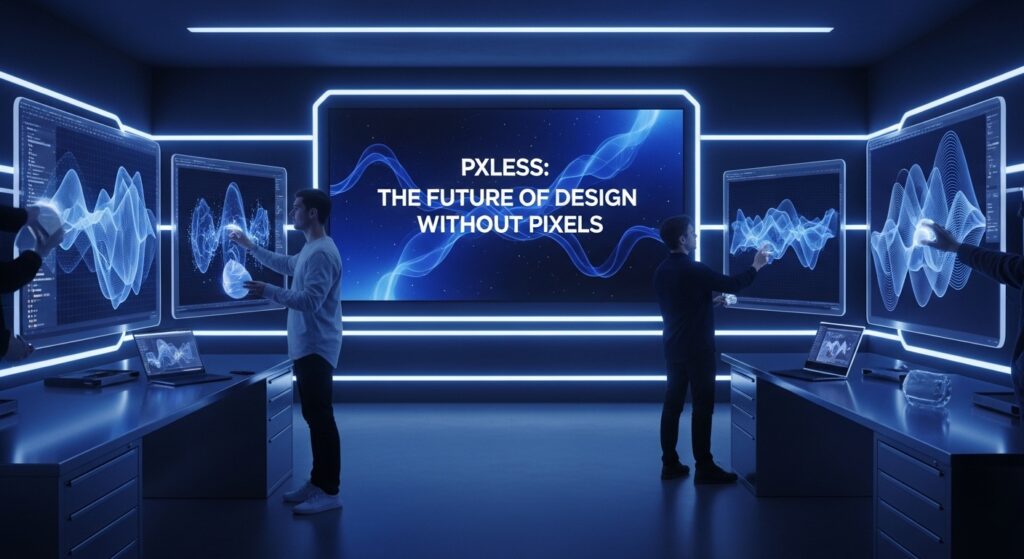
Imagine a world where design transcends the limitations of pixels. A realm where creativity flows freely, unbound by the constraints of traditional digital formats. Welcome to Pxless—a revolutionary approach that is set to redefine how we think about design. As technology evolves, so must our methods and perspectives. This innovative concept promises not only to enhance visual communication but also to open up new possibilities for artists, designers, and industries alike. Let’s dive into what Pxless really means and explore its transformative potential in today’s creative landscape.
What is Pxless?
Pxless is a revolutionary design concept that moves away from traditional pixel-based graphics. Instead of relying on fixed dimensions, it embraces fluid and scalable forms. This approach allows designers to create visuals that adjust seamlessly across various devices and screen sizes.
At its core, Pxless focuses on vector-based elements and algorithms. These techniques enable sharper images without loss of quality, regardless of zoom levels or resolutions. Designers can explore new creative avenues without being constrained by the limitations of pixels.
This innovation encourages a more dynamic interaction with digital content. By prioritizing adaptability over rigidity, Pxless opens doors to fresh user experiences in web design and beyond. The freedom provided by this method invites experimentation while ensuring clarity in visual communication.
The Problems with Pixels in Design
Pixels have long been the cornerstone of digital design. Yet, they come with inherent limitations that can stifle creativity. For starters, pixel-based graphics lose quality when scaled up or down. This often results in a blurry or distorted image.
Moreover, designing for various screen sizes complicates matters further. A design that looks perfect on one device might appear jarring on another due to pixelation issues.
The rigid nature of pixels also hampers flexibility in design concepts. Designers find themselves constrained by fixed dimensions and resolutions, which can restrict innovative approaches.
Additionally, the emergence of high-DPI displays has made traditional pixel-based designs less effective. What once looked sharp now appears compromised across different devices and contexts.
These challenges highlight why rethinking our approach to visual representation is crucial as we move toward more adaptable solutions like Pxless.
How Pxless is Changing the Game
Pxless is redefining design by eliminating the constraints of traditional pixel-based frameworks. This shift allows designers to create more fluid and adaptable visuals, where every element can seamlessly adjust to various screen sizes and resolutions.
With Pxless, designers can focus on the essence of their creations rather than being bogged down by pixel perfection. It encourages a more holistic approach, emphasizing proportion, scale, and movement over fixed dimensions.
The adoption of Pxless opens up new avenues for creativity. Designers are now free to explore innovative layouts that resonate across different platforms without losing impact or clarity.
Moreover, it fosters collaboration among teams by streamlining processes. Different departments can interact with designs in real-time without worrying about how they’ll look based on varying display environments.
This paradigm shift invites fresh perspectives in user experience design as well, making interactions smoother and more intuitive for end-users.
Benefits of Using Pxless in Design
Pxless offers a fresh perspective on design, stripping away the limitations of traditional pixel-based formats. This shift allows for more fluid and adaptable designs that can seamlessly transition across different mediums.
One key benefit is scalability. With Pxless, designers create visuals that maintain their integrity whether viewed on a smartphone or projected onto a large screen. This versatility enhances user experience significantly.
Moreover, Pxless fosters creativity. Designers are not confined to fixed dimensions anymore; they can explore innovative layouts without worrying about pixelation issues.
Collaboration also improves with Pxless. Teams can share and edit designs in real time without compatibility concerns tied to various devices or software versions.
It encourages sustainability in design processes by minimizing waste associated with outdated pixels and enhancing efficiency through streamlined workflows.
Potential Impact on Other Industries
Pxless technology holds promise beyond design, potentially transforming various industries. For instance, in fashion, it could redefine how collections are conceptualized and shared. Designers might create garments that exist purely as digital representations, allowing for greater experimentation without the waste associated with physical samples.
In architecture, Pxless can facilitate immersive virtual environments. Architects could visualize entire projects before ground is broken. This innovation not only enhances creativity but also minimizes costly revisions.
Moreover, education stands to benefit significantly. Students could engage with complex concepts through interactive experiences rather than static images or text alone. Learning becomes more dynamic and memorable when students can interact directly with content.
Healthcare is another area ripe for change. Medical professionals might utilize Pxless to simulate surgeries or visualize anatomy more effectively—enhancing training while improving patient outcomes in real scenarios.
These shifts suggest a future where Pxless redefines not just design but the very fabric of multiple sectors.
Criticisms and Concerns
Despite its innovative approach, Pxless has not escaped scrutiny. Some critics argue that this shift away from pixels may overlook the deep-rooted functionality they provide. Pixels have been the backbone of digital design for decades, and many fear losing that familiarity.
Another concern is accessibility. Not all designers are ready to embrace a pixel-free environment. The learning curve could alienate those who lack technical expertise or resources to adapt swiftly.
Furthermore, there’s skepticism about compatibility with existing tools and platforms. Designers rely heavily on established software that operates primarily within a pixel framework. Transitioning might disrupt workflows and reduce productivity initially.
Sustainability also raises questions. As industries push for innovation, concerns regarding potential waste in redesigns linger in discussions around Pxless adoption. These criticisms highlight the complexities involved as we navigate this new terrain in design evolution.
The Future of Pxless and Design
The future of Pxless is poised to redefine how we approach design. Imagine a world where creativity flows without the constraints of traditional pixel-based limitations. This shift opens up endless possibilities for designers across various fields.
As technology evolves, tools that support Pxless methodologies will become more accessible. Designers can harness the power of vector graphics and 3D modeling to create fluid, adaptable visuals that respond dynamically to user interactions.
Moreover, collaboration among teams will improve significantly. With standardized formats free from pixels, sharing designs becomes seamless and efficient. Teams can focus on innovation rather than compatibility issues.
This progressive movement could also inspire new educational frameworks in design schools. Future generations might prioritize adaptability over rigidity, equipping them with skills necessary for an ever-changing digital landscape.
Embracing Pxless means welcoming an era filled with potential and creativity beyond imagination. The journey ahead looks bright as boundaries blur between art and technology.
Conclusion
Pxless represents a significant shift in design philosophy. It challenges long-standing conventions and opens up new avenues for creativity.
As designers embrace this pixel-free approach, we can expect an evolution in visual aesthetics and functionality. The potential for innovation is vast.
Exploring the limitless possibilities of Pxless will likely lead to groundbreaking applications beyond traditional design fields. This transformative technology invites collaboration across disciplines.
The journey into a pxless future promises not only changes in how we create but also how audiences experience digital content. As more creators adopt this method, the landscape of design will continue to evolve.
This movement toward a pixel-less world could redefine our interactions with technology itself, making it more intuitive and engaging than ever before.